You Won’t Believe These Hidden Festivals in Singapore
When you think of Singapore, futuristic skylines and hawker centers probably come to mind—but what about its secret festival culture? I stumbled upon something most tourists never see: intimate, grassroots celebrations tucked behind high-rises and shopping malls. From lantern-lit alleys in quiet neighborhoods to drum circles in community parks, these off-the-beaten-path festivals reveal a side of Singapore that’s vibrant, authentic, and deeply local. This is not the polished version—it’s the real heartbeat of the city. These gatherings are not choreographed for tourists or amplified by social media; they unfold quietly, rooted in tradition, community, and the everyday rhythm of life. For the curious traveler willing to look beyond the guidebooks, these hidden festivals offer a rare and touching glimpse into the soul of a nation built on diversity, resilience, and shared memory.
The Hidden Pulse of Singapore: Beyond Marina Bay
Singapore is often celebrated for its gleaming architecture, world-class shopping, and spotless streets—but beneath this modern exterior lies a cultural tapestry woven with quiet, personal celebrations that most visitors never encounter. While Marina Bay Sands and Gardens by the Bay draw millions each year, the true spirit of festivity in Singapore often resides in its residential neighborhoods, where community centers, temples, and clan associations host events that are more about belonging than spectacle. These are not grand parades or ticketed performances, but spontaneous, heartfelt gatherings that reflect the values of harmony, respect, and intergenerational connection. The air in these places carries the scent of incense, jasmine rice, and slow-cooked curries, while the sounds of chanting, folk music, and children’s laughter drift through open windows and shared courtyards.
What makes these local festivals so powerful is their authenticity. Unlike the curated experiences designed for mass appeal, these events are not staged for outsiders. They are part of the natural rhythm of life in Singapore’s ethnic enclaves—places where families have lived for generations and where traditions are passed down like heirlooms. A temple fair in Toa Payoh, for instance, might feature a modest altar adorned with fruits and flowers, surrounded by elderly devotees lighting joss sticks and murmuring prayers. Nearby, a group of teenagers might be setting up a makeshift stage for a Chinese opera performance, their enthusiasm undimmed by the lack of professional lighting or sound equipment. There is no crowd control, no entry fee, and no expectation of perfection—only the joy of participation and the comfort of familiarity.
These grassroots festivals also serve as vital spaces for cultural continuity. In a rapidly modernizing city where high-rise apartments replace old shophouses and digital screens dominate daily life, such events provide a tangible link to the past. They allow younger generations to experience customs firsthand—not through textbooks or museum exhibits, but through touch, taste, and shared ritual. A child learning to fold paper lotus lanterns during a neighborhood Mid-Autumn celebration, for example, is not just making a craft; they are engaging in a symbolic act that connects them to ancestors who once did the same under different skies. These moments may seem small, but they are essential in preserving the richness of Singapore’s multicultural identity.
Little India’s Quiet Carnival: Deepavali After Dark
Every autumn, Little India transforms into a dazzling spectacle for Deepavali, the Festival of Lights. Tourists flock to Serangoon Road, where golden arches, vibrant murals, and endless rows of sweets and saris create a sensory overload. Yet, just a few blocks away, in the quieter housing estates and narrow lanes behind the main thoroughfare, a more intimate version of the festival unfolds—one that few outsiders ever witness. Here, Deepavali is not a public display but a private expression of faith, family, and neighborhood solidarity. As dusk falls, residents string up handmade lanterns and oil lamps along their balconies and doorways, casting a warm, flickering glow that turns entire corridors into living pathways of light.
One evening, I followed the sound of sitar music into a quiet HDB estate where a small group of families had gathered in a shared courtyard. A grandmother in a silk sari sat cross-legged on a mat, teaching her grandchildren how to arrange marigolds into garlands. Nearby, a young man played classical ragas on a borrowed violin, his eyes closed in concentration. As the sky deepened into indigo, the community began a quiet procession—each person carrying a small oil lamp, walking barefoot in a slow circle around the courtyard while softly chanting prayers. There were no microphones, no stage, and no audience. It was simply a moment of collective reverence, unscripted and deeply moving.
What struck me most was the absence of performance. No one was posing for photos or seeking attention. The celebration was not about visibility but about presence—being together, honoring tradition, and sharing joy in its purest form. At one point, a woman offered me a plate of homemade murukku and ladoo, insisting I take more when I hesitated. “It’s not Deepavali if we don’t share,” she said with a smile. That simple act of generosity encapsulated the essence of the evening: warmth, inclusion, and the quiet strength of community. These after-dark celebrations may not make it into travel brochures, but they are where the true spirit of Deepavali lives on.
Chinatown’s Forgotten Mid-Autumn Moments
The Mid-Autumn Festival in Singapore is best known for its elaborate lantern displays in Chinatown, where thousands of visitors stroll beneath glowing dragons and cartoon-themed installations. While these public exhibitions are undeniably beautiful, they represent only one facet of the festival. In the quieter corners of the district—within old shophouse courtyards, clan association halls, and family-run eateries—a more personal tradition continues, one that honors the moon’s symbolism of reunion and reflection. Here, the festival is less about spectacle and more about intimacy, storytelling, and the quiet passing of customs from one generation to the next.
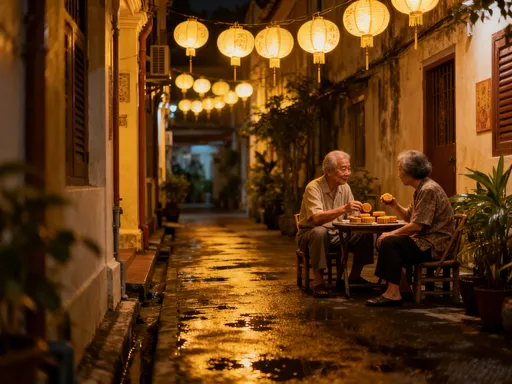
One September evening, I was invited to a private gathering in a restored 19th-century clan house tucked behind a bustling street market. The space, lit only by candlelight and a few paper lanterns, felt timeless. A circle of elderly residents sat on wooden stools, sipping oolong tea and nibbling on mooncakes wrapped in handmade parchment. In the center, a young girl in a traditional qipao stood nervously, preparing to recite a classical Chinese poem about the moon. As she began, her voice soft but steady, the room fell silent. When she finished, the elders nodded in approval and handed her a small, hand-wrapped mooncake as a token of appreciation. This ritual, known as *shīcí*, is rarely seen today, yet in this hidden courtyard, it was alive and cherished.
What made the experience so special was its simplicity and sincerity. There were no announcements, no crowds, and no digital recordings. The focus was on the act of remembering—of keeping language, poetry, and familial bonds alive through shared moments. One of the elders later explained that these gatherings used to happen in nearly every neighborhood, but now they are rare. “We do this not for fame,” he said, “but so our grandchildren will know where they come from.” In a city that moves at lightning speed, such gatherings are acts of quiet resistance—a way of saying that some things are worth slowing down for.
Kampong Spirit: Malay Festivals in Geylang Serai
Geylang Serai is widely recognized as the heart of Singapore’s Malay community, and during Hari Raya Puasa, the area bursts with color, fragrance, and energy. The official bazaar draws huge crowds, offering everything from *kuih-muih* to hand-embroidered *tudungs*. Yet, the most meaningful celebrations often occur behind closed doors—in the modest homes and communal spaces where the *kampong spirit* still thrives. *Kampong*, a Malay word for village, evokes a way of life centered on closeness, mutual care, and open-hearted hospitality. Though the physical villages are gone, this spirit endures in the way families and neighbors come together during festive seasons, transforming ordinary homes into spaces of warmth and abundance.
I was invited to a Hari Raya gathering in a three-room apartment in a nearby housing estate. The moment I stepped inside, I was enveloped by the rich aroma of slow-cooked rendang, spiced ketupat, and freshly fried *lemper*. The living room had been cleared of furniture, and dozens of relatives and neighbors sat together on floor mats, sharing a single, sprawling meal. Children darted between the adults, refilling tea and passing around platters of food. No one kept track of who had eaten what—everyone simply ate, laughed, and talked as one extended family. At one point, an elderly uncle began recounting stories from his childhood Hari Raya celebrations in a rural village, his voice rich with nostalgia. The room listened in rapt attention, the younger ones leaning in to catch every detail.
What made this experience unforgettable was the sense of belonging it fostered. I had arrived as a guest, but by the end of the evening, I felt like part of the family. No introductions were needed; no explanations were required. I was simply welcomed, fed, and included. This is the essence of the *kampong spirit*—a cultural value that prioritizes human connection over formality, generosity over status, and togetherness over convenience. In a world where urban life often feels isolating, such moments are a powerful reminder of what community can mean.
Peranakan Pageantry in Joo Chiat: More Than a Photo Op
Joo Chiat is renowned for its colorful Peranakan shophouses, where intricate tiles and ornate facades attract photographers and history buffs alike. Each year, the neighborhood hosts a Peranakan festival that celebrates the unique heritage of the Straits Chinese—a community born from the marriage of Chinese immigrants and local Malay cultures. While the public events feature dazzling costumes, dance performances, and food tastings, the most meaningful aspects of the festival happen behind the scenes, in private homes and community centers where elders pass down knowledge to younger generations. This is not a performance for tourists; it is a living act of cultural preservation.
I was fortunate to attend a private *kebaya* tea ceremony hosted by a group of Peranakan women in their 70s and 80s. The event took place in a restored heritage house, its rooms filled with antique furniture, porcelain, and framed family portraits. The women wore hand-embroidered *kebayas*, each stitch a testament to years of patient craftsmanship. As we sat around a low table, they served *kueh lapis* and pandan tea, explaining the significance of each element of the ritual. “Every piece of embroidery tells a story,” one woman said, pointing to the floral patterns on her blouse. “These flowers are not just decoration—they represent strength, resilience, and the beauty of our women.”
The ceremony was conducted in quiet reverence, with no cameras allowed. This rule was not about secrecy, but about respect—for the tradition, for the elders, and for the moment itself. As I sipped my tea, I listened to stories of war, migration, and survival—of grandmothers who preserved recipes during difficult times, of daughters who learned beading by candlelight, of families who kept their language alive even when it was no longer widely spoken. These narratives were not grand historical declarations, but personal, intimate reflections that carried the weight of generations. By participating, I wasn’t just learning about Peranakan culture—I was being invited into its living memory.
How to Find These Festivals: A Local’s Approach
One of the reasons these festivals remain hidden is that they are not marketed or promoted through mainstream channels. You won’t find them on major travel apps, official tourism websites, or even most guidebooks. They exist in the margins of public awareness, shared through word of mouth, community notice boards, and neighborhood social media groups. To discover them, travelers must adopt a more patient, observant, and respectful approach—one that prioritizes connection over convenience.
The first step is to talk to locals. Hawker stall owners, taxi drivers, and shopkeepers often know about upcoming events in their neighborhoods. A simple question—“Are there any special celebrations coming up nearby?”—can open doors to unexpected invitations. Community centers and religious institutions also post flyers about cultural events, many of which are open to the public but rarely advertised beyond the immediate area. Following local Facebook groups or neighborhood WhatsApp communities can also yield valuable leads, especially in the weeks leading up to major holidays like Deepavali, Hari Raya, or Chinese New Year.
Timing is equally important. Many of these grassroots festivals take place just before or after the official public holidays, when families and communities gather in more private settings. For example, the quiet Deepavali processions in Little India often occur on the evening before the main public celebrations, while the intimate Hari Raya meals in Geylang Serai happen on the second or third day of the holiday, when the initial rush has subsided. Being flexible with your schedule increases your chances of encountering these authentic moments.
Most importantly, respect is essential. When attending such events, observe quietly, dress modestly, and ask permission before taking photographs. Avoid treating these gatherings as photo opportunities or entertainment. Instead, approach them with humility and gratitude. If you are invited into a home, bring a small gift—perhaps a box of fruit or a pack of tea—as a gesture of appreciation. And if no invitation comes, simply being a respectful observer is enough. These festivals are not performances; they are acts of cultural life. By honoring their spirit, you honor the people who keep them alive.
Why These Experiences Matter: Culture Over Commerce
In a city known for its efficiency, innovation, and global connectivity, these hidden festivals stand as quiet acts of resistance against cultural erosion. They remind us that heritage is not something frozen in time or confined to museums—it is alive, evolving, and deeply personal. These grassroots celebrations are not driven by tourism revenue or social media metrics; they are sustained by love, memory, and a collective desire to preserve identity in a rapidly changing world.
For travelers, seeking out these experiences offers more than just a unique itinerary—it fosters genuine connection. When you sit on a floor mat sharing a meal with a Malay family during Hari Raya, or listen to a grandmother recite poetry under a paper lantern, you are not just observing a tradition. You are participating in a moment of human warmth that transcends language and nationality. These encounters leave lasting impressions not because they are exotic, but because they are real.
Moreover, supporting these local celebrations—by attending respectfully, sharing stories, and encouraging others to look beyond the surface—helps ensure their survival. In a world where commercialization often dilutes cultural meaning, the quiet persistence of these festivals is a testament to the resilience of community. They prove that even in a high-tech metropolis, the human need for belonging, tradition, and shared joy remains strong.
So the next time you plan a trip to Singapore, look beyond the skyline. Wander into the side streets, talk to the neighbors, and listen for the sound of music drifting from an open window. The city’s true magic doesn’t lie in its monuments, but in the quiet, glowing moments where culture lives—not as a show, but as a way of life. And when you find one of these hidden festivals, you won’t just see Singapore—you’ll feel it, remember it, and carry a piece of it with you long after you’ve left.