Secret Wild Corners of Cambridge You’ve Never Heard Of (But Absolutely Should)
Have you ever imagined finding untouched green spaces right in the heart of a historic university city? Cambridge isn’t just about stone-clad colleges and punting on the Cam—hidden beyond the tourist trails are quiet meadows, protected wetlands, and ancient woodlands bursting with life. These are not mere footnotes on a map, but vital sanctuaries where nature thrives amid academic grandeur. I’ve wandered these spots for years, and trust me, they’re mind-blowing. From Bronze Age hills to restored floodplains echoing with birdsong, these places offer more than scenic views—they provide balance, beauty, and breathing room. This is your insider guide to the city’s best-kept natural secrets, where every path tells a story and every meadow holds a whisper of the wild.
Why Cambridge’s Protected Areas Matter More Than You Think
Cambridge is globally celebrated for its academic legacy, but its lesser-known treasure lies beneath the surface—its network of protected green spaces. These areas are not simply decorative remnants of rural England; they are active, dynamic ecosystems that play a crucial role in sustaining both urban life and natural balance. Designated sites such as Local Nature Reserves and Sites of Special Scientific Interest (SSSIs) serve as anchors for biodiversity, supporting pollinators, nesting birds, amphibians, and rare plant species. They also act as natural sponges during heavy rainfall, reducing flood risk in low-lying parts of the city—a growing concern amid changing climate patterns.
Beyond their ecological function, these spaces contribute significantly to public well-being. Studies have shown that access to green environments reduces stress, improves concentration, and fosters emotional resilience. For residents and visitors alike, a walk through a quiet woodland or along a riverside meadow can be as restorative as it is inspiring. The Cambridge Wildlife Trust, alongside local councils and volunteer groups, has been instrumental in managing these areas, ensuring they remain accessible while protecting fragile habitats. Their work reflects a broader understanding: that cities do not have to choose between progress and preservation. Instead, thoughtful integration of nature into urban planning creates a richer, healthier environment for everyone.
What makes Cambridge unique is how seamlessly its wild corners coexist with centuries-old architecture and bustling streets. These green zones are not distant escapes requiring long journeys—they are within walking or cycling distance of the city center. This proximity allows for spontaneous visits, turning a routine errand into an opportunity for connection with the natural world. When we recognize these spaces not just as scenic backdrops but as living, breathing parts of the city’s infrastructure, we begin to appreciate their true value. They are not luxuries—they are necessities, quietly sustaining both wildlife and human spirit.
The Hidden Green Lungs: Wandlebury Country Park & The Gog Magog Hills
Situated just south of Cambridge, Wandlebury Country Park forms the crown jewel of the Gog Magog Hills—an ancient chalk downland landscape shaped by millennia of natural forces and human activity. Rising gently above the surrounding flatlands, this rolling terrain offers panoramic views across the Cambridgeship countryside, with Cambridge’s spires visible in the distance on clear days. What sets this area apart is its rare chalk grassland habitat, a once-common ecosystem now reduced to fragments across the UK. Here, however, it flourishes, hosting a dazzling array of wildflowers such as kidney vetch, harebell, and orchids like the fragrant bee orchid, which blooms in early summer.
The site’s historical significance adds another layer of depth. At its summit stands the remains of a Bronze Age hillfort, later adapted by the Romans and then the Anglo-Saxons. Walking along the earthworks, one can almost feel the presence of those who once guarded this high ground. Today, the park is managed by Cambridge Past, Present & Future, a conservation charity dedicated to preserving both natural and cultural heritage. Their efforts ensure that grazing animals like sheep are used to maintain the grassland structure, preventing scrub encroachment and supporting insect life, including rare butterflies such as the chalkhill blue.
For visitors, Wandlebury offers well-marked trails suitable for all ages and abilities. The main entrance off the M11 junction 12 provides ample parking and an accessible route leading directly to the historic ring earthwork. A longer loop trail circles the entire hillfort, passing through pockets of ancient woodland where bluebells carpet the forest floor each spring. Cyclists will appreciate the shared-use paths that connect Wandlebury to nearby villages like Great Shelford and Harston, making it a perfect starting point for a longer ride. Dogs are welcome, provided they are kept under close control, especially near grazing animals and ground-nesting birds.
The best time to visit is between April and July when the wildflowers are at their peak. Early morning visits offer the added reward of birdwatching—skylarks hover overhead singing their cascading songs, while kestrels hover above the slopes searching for small mammals. Because the park sees fewer tourists than central Cambridge attractions, it retains a sense of tranquility even on weekends. Whether you come for the history, the views, or the simple pleasure of walking through open countryside, Wandlebury reminds us that wilderness and civilization need not be opposites—they can coexist in harmony.
A Riverside Escape: The Cambridge Nature Reserve Network Along the Cam
While punting tours draw crowds to the central stretches of the River Cam, quieter and equally enchanting experiences await along the river’s natural corridors upstream and downstream of the city. The interconnected reserves of Sheep’s Green, Coe Fen, and the Byron’s Pool area form a continuous ribbon of protected wetland and meadowland, stretching from Grantchester Meadows in the south to the edge of central Cambridge. These areas were once common grazing lands used by local villagers—a tradition that continues today in spirit, though now managed for conservation rather than agriculture.
Together, they create a vital green artery through the urban landscape. Reed beds, alder carr woodlands, and seasonally flooded meadows support a rich diversity of life. Kingfishers dart along the water’s edge, moorhens nest in dense vegetation, and dragonflies patrol the ponds in summer. The absence of motorized boats preserves the acoustic peace of these zones, allowing the sounds of nature—rustling reeds, croaking frogs, birdsong—to dominate. This quietude makes them ideal for mindful walks, photography, or simply sitting on a bench and watching the world unfold.
Access points are plentiful and clearly marked. From the Grassy Corner pub in Grantchester, a footpath leads into Grantchester Meadows, where spring brings carpets of meadow buttercups and summer sees hay meadows buzzing with bees. Moving north toward Sheep’s Green, the path crosses several wooden footbridges over side channels of the Cam. This section is particularly popular with dog walkers and families, yet retains a rural charm due to careful management that limits development and maintains native vegetation.
One of the most rewarding experiences is visiting Byron’s Pool, named after the poet Lord Byron, who reportedly swam here during his time at Trinity College. The site includes a small nature reserve managed by the National Trust, featuring wet woodland and open water. While swimming is no longer permitted, the area remains a haven for wildlife. Seasonal changes bring different rewards: winter floods attract wintering birds like snipe and teal, while spring sees frogspawn appear in still pools. Visitors are encouraged to follow designated paths and avoid trampling sensitive areas, particularly during nesting season. These reserves thrive because people respect their fragility—and in return, they offer moments of stillness and beauty unmatched in the city.
Off the Beaten Path: Coton Countryside Reserve and the West Cambridge Wilds
Nestled near the University of Cambridge’s West Cambridge research campus, Coton Countryside Reserve is a hidden gem often overlooked by both tourists and locals. Unlike the more famous green spaces, this 30-hectare site was once farmland transformed through deliberate ecological restoration. Today, it showcases a mosaic of habitats—species-rich meadows, shallow ponds, scrubland, and hedgerows—carefully designed to maximize biodiversity. It is home to skylarks, whose spiraling song can be heard on spring mornings, and to the elusive water vole, a protected species that has made a comeback thanks to habitat improvements.
The reserve’s layout encourages exploration without disruption. A network of gravel and earth paths loops through the different zones, allowing visitors to observe wildlife without venturing off-trail. Information boards at key junctions identify native plants and explain conservation practices, making it an excellent destination for families seeking an educational yet relaxing outing. Bird hides overlook the wetland areas, offering sheltered spots for patient observation. Because the site is less frequented than central reserves, it provides a rare sense of solitude, especially during weekday mornings when the university campus is busiest.
Getting there is straightforward: the main entrance is accessible from Coton Footpath 1, just off Coton Road. Limited parking is available nearby, and cyclists can reach the reserve via the Cambridgeshire Guided Busway’s shared-use path. Early morning or late afternoon visits are highly recommended, as these times coincide with peak animal activity and softer lighting ideal for photography. Dawn brings mist rising from the ponds and the calls of waking birds; dusk offers the chance to spot pipistrelle bats emerging at twilight.
One of the reserve’s strengths is its adaptability to seasonal rhythms. In spring, yellow flag irises bloom beside the ponds, and frogs begin their breeding rituals. Summer brings buzzing insect life and the hum of grasshoppers in the tall grass. Autumn transforms the scrubland with berries and falling leaves, attracting fieldfares and redwings from northern Europe. Even in winter, the landscape retains its appeal, with frost-covered spiderwebs glistening in the sun and flocks of finches feeding on seed heads. Coton Countryside Reserve proves that nature doesn’t require grand vistas to inspire awe—it thrives in subtlety, resilience, and quiet transformation.
Green Spaces with History: Trumpington Meadows and the Roman Past
Trumpington Meadows, located just southeast of Cambridge, exemplifies the powerful synergy between ecological conservation and archaeological preservation. Designated as a Site of Special Scientific Interest, this floodplain meadow borders the River Cam and has been shaped by centuries of natural flooding and human land use. Its grasslands support a variety of rare plant species adapted to periodic inundation, including snake’s-head fritillary and green-winged orchid—flowers that once dotted meadows across lowland England but are now increasingly rare.
What makes Trumpington Meadows extraordinary is the depth of history embedded in its soil. Archaeological surveys have uncovered evidence of Roman settlement, including pottery fragments, building foundations, and even remnants of a Roman road. These findings suggest the area was once part of a larger agricultural and transportation network serving the Roman town of Duroliponte, the precursor to modern Cambridge. More recently, excavations prior to nearby development revealed an Anglo-Saxon bed burial—a woman laid to rest with personal items, now displayed at the Museum of Archaeology and Anthropology in central Cambridge.
Today, the meadow is managed through a combination of controlled grazing and seasonal mowing, mimicking traditional farming practices that once maintained such landscapes. This approach supports both botanical diversity and soil stability, preserving the integrity of any undiscovered archaeological features beneath the surface. Public footpaths cross the meadow, allowing visitors to walk through this layered landscape while minimizing impact. Interpretive signs explain both the ecological and historical significance of the site, inviting reflection on how past and present intertwine in the natural world.
A visit here feels like stepping into a living archive. In late spring, the meadow blooms with color, and the air hums with pollinators. Nearby, the outline of the Anglo-Saxon burial site is marked on the ground, visible from the footpath. It’s a poignant reminder that humans have long sought harmony with the land—not as dominators, but as stewards. Trumpington Meadows invites us to continue that legacy, honoring the past by protecting the future of this fragile, fertile landscape.
How to Visit Responsibly: Rules That Protect These Fragile Places
As interest in nature-based recreation grows, so does the responsibility to visit these spaces with care. The very qualities that make Cambridge’s wild corners special—seclusion, biodiversity, tranquility—are also what make them vulnerable. A single misstep, such as straying off-path or leaving litter, can have lasting consequences for delicate ecosystems. Fortunately, simple actions can ensure these areas remain healthy and accessible for generations to come.
The first principle is to stay on designated paths. This protects fragile vegetation, prevents soil erosion, and avoids disturbing ground-nesting birds like skylarks and meadow pipits. Many of these reserves are mown or grazed on a rotational basis, and stepping into unmown areas can damage young plants or crush hidden nests. Similarly, keeping dogs under close control—preferably on a lead during spring and early summer—helps prevent them from chasing wildlife or trampling sensitive habitats.
Littering, even of biodegradable items like apple cores or banana peels, should be avoided. These introduce non-native seeds and disrupt natural nutrient cycles. All waste, including dog waste, should be taken home or disposed of in provided bins. Feeding wildlife, while well-intentioned, can lead to dependency and health issues for animals; it is best to observe without interfering.
These guidelines are not arbitrary—they are often backed by legal protections. Many of these sites fall under Local Nature Reserve status, meaning damaging the environment or disturbing protected species can carry fines under the Wildlife and Countryside Act 1981. However, compliance should stem not from fear of penalties, but from a shared sense of stewardship. When we treat these spaces with respect, we become part of their story—not just visitors, but guardians.
Technology can also support responsible travel. Apps like iNaturalist allow visitors to document sightings without disturbing species, contributing valuable data to citizen science projects. Using GPS to follow marked trails ensures navigation without damaging unmarked areas. The goal is not restriction, but deeper engagement—learning to move through nature with awareness, gratitude, and humility.
Beyond the Guidebook: Making Time for Stillness in Cambridge’s Quiet Zones
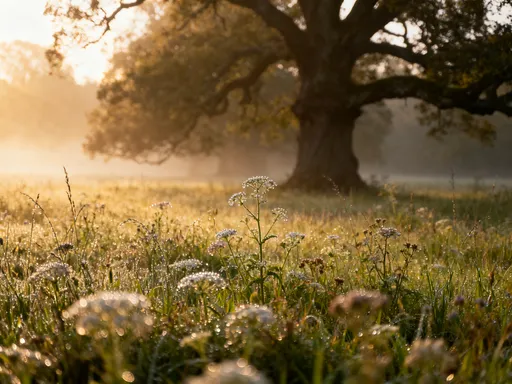
In a world that moves at ever-increasing speed, the quiet zones of Cambridge offer something rare: stillness. While the city center buzzes with students, tourists, and scholars, these hidden corners remain suspended in a gentler rhythm. Here, time slows. A spiderweb glistens with dew. A heron stands motionless at the water’s edge. The wind moves through tall grass like a whispered secret. These are not just places to see, but to feel—to reconnect with a quieter, more contemplative version of ourselves.
Mindful walking, practiced in these natural sanctuaries, has been shown to reduce anxiety and enhance emotional clarity. There is no agenda, no checklist, no need to capture the perfect photograph. Instead, there is presence—listening to the rustle of a vole in the undergrowth, watching clouds drift over open fields, breathing in the scent of damp earth after rain. These moments of attention, though simple, can be profoundly healing.
For families, these spaces offer a chance to unplug and explore together without screens or schedules. Children learn by observing: how a dragonfly lands on a reed, how bees move from flower to flower, how seasons change the landscape. For older adults, the gentle terrain and well-maintained paths make these reserves accessible and inviting, promoting physical activity without strain. And for those navigating life transitions—retirement, loss, new beginnings—nature provides a steady, nonjudgmental companion.
The true value of Cambridge’s wild corners lies not in their rarity alone, but in their availability. They are not locked behind gates or priced out of reach. They are open, free, and waiting. To visit them is not merely to escape the city, but to rediscover a deeper connection—to the earth, to history, to oneself. So take the path less traveled. Arrive early. Sit awhile. Listen. And when you leave, carry that stillness with you, knowing you’ve touched something timeless. In preserving these places, we do not just protect nature—we nurture the human spirit.