Art Frozen in Ash: What Pompeii’s Walls Whisper About Life
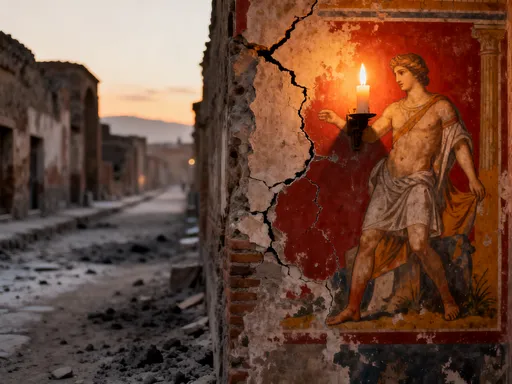
Walking through Pompeii feels like stepping into a painted dream—houses frozen mid-breath, walls bursting with frescoes that laugh, myth, and live. I didn’t expect art to hit me this hard in a ruined city. But here, beauty wasn’t saved for temples; it lived in kitchens, courtyards, and bedrooms. These vibrant scenes aren’t just decoration—they’re voices from 79 AD, shouting joy, fear, and daily life. Let me take you through the theme areas where pigment survived disaster, and art became eternity.
The Canvas of a Doomed City
Pompeii stands as one of the most extraordinary open-air art museums in human history, not by design, but by catastrophe. When Mount Vesuvius erupted in 79 AD, it buried the city under meters of volcanic ash and pumice, sealing homes, streets, and public buildings in a time capsule. While the eruption claimed thousands of lives, it also preserved an unparalleled record of Roman life—especially its art. The very force that destroyed the city became its unlikely guardian, shielding delicate frescoes, mosaics, and stucco reliefs from the erosion of time, weather, and human interference. Today, the ruins reveal a city where art was not confined to grand monuments but embedded in the fabric of everyday existence.
What makes Pompeii unique among archaeological sites is the immediacy of its visual legacy. Unlike other ancient cities where stone and architecture dominate, Pompeii’s walls speak in color. The ash that suffocated the city also created an oxygen-poor environment, slowing decay and preserving organic pigments that would have faded elsewhere. This accidental preservation allows modern visitors to see Roman art as it was meant to be seen—vivid, expressive, and emotionally resonant. The city’s layout naturally divides into what scholars refer to as “theme areas,” distinct zones where artistic expression reflects social hierarchy, domestic life, spiritual devotion, and public entertainment. These areas are not randomly distributed; they follow the rhythms of Roman urban life, where art served both aesthetic and functional roles.
In the residential districts, elite homes display mythological narratives and illusionistic landscapes, signaling wealth and cultural sophistication. In religious precincts, frescoes and statues communicate divine presence and communal piety. Public venues like theaters and baths use art to amplify sensory experience, while even modest shops and taverns feature decorative elements that suggest a widespread appreciation for beauty. This integration of art into all levels of society challenges the modern assumption that fine art was reserved for the privileged few. In Pompeii, art was democratic in reach, if not always in quality. Every painted wall, every mosaic threshold, tells a story—not only of the people who lived there but of a civilization that believed beauty belonged everywhere, even in the shadow of impending doom.
Domestic Elegance: Art in Private Homes
The private homes of Pompeii offer some of the most intimate and revealing glimpses into Roman domestic life, where art was not merely decorative but a language of status, identity, and aspiration. Among the most celebrated examples is the House of the Vettii, once owned by two wealthy freedmen who rose from servitude to prominence through commerce. Their home is a masterpiece of interior design, its walls adorned with frescoes that blend humor, mythology, and elegance. One room features the god Priapus weighing his enormous phallus against a bag of money—a whimsical symbol of prosperity and protection, reflecting both personal pride and the playful irreverence characteristic of Roman domestic art.
Another iconic residence, the House of the Faun, is named after a bronze statue of a dancing satyr and spans an entire city block. Its famous mosaic of Alexander the Great battling Darius III of Persia, likely a copy of a lost Greek painting, demonstrates the elite’s taste for Hellenistic culture and military heroism. But beyond such grand statements, the art in these homes served practical and psychological purposes. In the atrium and peristyle gardens, frescoes often depict lush landscapes, fountains, and aviaries—imaginary extensions of the physical space. These illusionistic paintings, known as *trompe-l'oeil* (French for “deceive the eye”), were designed to visually expand small or enclosed rooms, creating a sense of openness and tranquility in densely built urban environments.
The use of color and perspective in these domestic frescoes reveals a sophisticated understanding of visual psychology. Walls were divided into architectural panels—columns, cornices, and entablatures—painted to mimic marble revetment, even when the actual walls were plain plaster. This technique, known as the Second Style of Roman painting, created a theatrical illusion of depth, making interior spaces feel like open pavilions or garden loggias. Such artistic choices were not arbitrary; they reflected the Roman ideal of *otium*—leisure time spent in cultivated refinement. For the homeowner, these spaces were sanctuaries of contemplation and hospitality, where guests could be impressed not only by wealth but by cultural literacy. Art, in this context, was a performance of identity—silent, enduring, and deeply personal.
Sacred Imagery: Religion and Decoration in Temples
In Pompeii, the sacred and the artistic were inseparable. Religious spaces such as the Temple of Apollo and the Sanctuary of Augustus were not only centers of worship but also showcases of visual storytelling, where art functioned as a bridge between the human and the divine. The Temple of Apollo, one of the city’s oldest religious structures, sits atop a raised platform surrounded by Corinthian columns, its walls once painted with deep reds and yellows that would have shimmered in the Mediterranean sun. A marble altar stands at the center, flanked by a statue of Apollo and a sacred column wrapped in carved serpents—symbols of healing and prophecy. The surrounding frescoes depicted scenes from mythology, including the god’s victory over the Python, reinforcing his role as protector of the city.
The Sanctuary of Augustus, dedicated to the deified first emperor of Rome, blends political power with spiritual reverence. Here, frescoes and reliefs celebrated imperial achievements while invoking divine favor. The use of gold leaf, rare pigments, and finely carved stucco work elevated these spaces beyond mere decoration—they were designed to inspire awe and devotion. Color played a crucial role in religious aesthetics: deep reds symbolized vitality and sacrifice, blues (often made from costly Egyptian cobalt) represented the heavens, and whites conveyed purity. These choices were not merely ornamental; they were part of a symbolic language understood by worshippers, guiding emotional and spiritual responses during rituals.
Even smaller household shrines, or *lararia*, found in homes across the city, reveal the intimate connection between art and faith. Typically located near the kitchen or entrance, these shrines featured painted niches with images of the Lares—household gods who protected the family—and the genius of the paterfamilias, the male head of the household. Some lararia include three-dimensional stucco figures or small frescoes of sacrificial scenes, suggesting that daily offerings were accompanied by visual reminders of divine presence. In these modest yet powerful spaces, art was not passive; it was participatory, reinforcing the rhythm of domestic piety. The integration of artistic expression into religious practice underscores a fundamental truth about Pompeian culture: beauty was not separate from belief, but a vessel through which the sacred was made visible.
Public Spectacle: Art in Theaters and Amphitheaters
The cultural life of Pompeii thrived in its performance spaces, where art and entertainment converged to create immersive experiences for citizens of all classes. The Large Theater, carved into the natural slope of the city, could seat up to 5,000 spectators and was used for musical and dramatic performances. Its stage wall, or *scaenae frons*, was once painted in bright colors and adorned with columns, statues, and friezes depicting gods and muses, transforming the backdrop into a celestial palace. These visual elements were not mere set dressing; they framed the narrative of the performance, helping audiences suspend disbelief and enter the world of myth and tragedy.
Adjacent to the theater, the Odeon served as a roofed concert hall for more intimate performances, its interior decorated with stucco reliefs and painted panels that absorbed sound while enhancing acoustics. The use of art in these spaces was carefully calibrated to amplify emotional impact. Frescoes of Dionysus, the god of wine and theater, reminded viewers of the divine origins of performance, while scenes of satyrs and maenads added a touch of wild revelry. Even the floors were works of art—mosaics with geometric patterns and theatrical masks guided the audience’s steps and set the tone before the show began.
The Amphitheater, built around 70 BC, was one of the earliest of its kind in the Roman world and could hold up to 20,000 people. Used for gladiatorial games and public spectacles, it was more than a venue for violence—it was a stage for civic identity. The exterior walls were painted in bold reds and yellows, making the structure a landmark visible from afar. Inside, the seating arrangement reflected social hierarchy, with the elite closest to the action and commoners in the upper tiers. Art played a role in reinforcing this order: painted inscriptions and decorative panels celebrated sponsors and municipal officials, turning the amphitheater into a canvas of political and social expression. The experience of attending an event here was multisensory—sights, sounds, and even smells combined to create a collective memory, with art serving as the unifying thread.
Everyday Beauty: Art in Taverns and Shops
One of the most surprising revelations of Pompeii is that art was not confined to the homes of the wealthy or the halls of worship. Even in the most humble settings—taverns, bakeries, fulleries (laundries), and workshops—colorful frescoes and decorative elements abound, suggesting that beauty was a shared value across social classes. In the thermopolia, ancient equivalents of fast-food counters, customers could enjoy a meal while gazing at frescoes of animals, mythological figures, or scenes of daily life. One such tavern features a vivid painting of a dog chained to a post with the warning “Cave Canem” (“Beware of the Dog”) inscribed beneath—both a practical sign and a work of art.
Bakeries often included lararia near ovens, where workers made daily offerings for protection and prosperity. These small shrines were painted with bright colors and images of deities like Mercury, god of commerce, or Bacchus, god of wine and abundance. The presence of such art in industrial spaces underscores the Roman belief that no part of life was too mundane for divine attention or aesthetic enhancement. Even commercial signage took artistic form: election notices painted on house fronts doubled as public art, featuring bold lettering and symbolic imagery to promote candidates for local office. These campaign paintings, known as *programmata*, were often commissioned from professional artists and displayed in high-traffic areas, turning the city itself into a dynamic gallery of political and visual culture.
The discovery of refined frescoes in modest dwellings further challenges the notion that art was a luxury. In homes with limited space and resources, residents still invested in wall paintings that depicted gardens, fountains, or mythological scenes—dreams of escape and refinement. These choices reflect a deep-seated human desire to surround oneself with beauty, even in the face of hardship. In Pompeii, art was not a privilege; it was a practice, woven into the daily routines of cooking, shopping, and socializing. This democratization of aesthetics reveals a society where creativity was not the domain of a few, but a shared language of hope, identity, and resilience.
Techniques and Traditions: How Pompeii’s Art Was Made
The enduring brilliance of Pompeii’s art is due not only to the accident of preservation but to the sophisticated techniques employed by Roman artisans. Fresco painting, the most common method, involved applying pigments to wet plaster, allowing the colors to chemically bond with the wall surface as it dried. This technique required precision and speed, as artists had to complete sections within a single day before the plaster set—a process known as *giornata*. Traces of these daily work segments are still visible in the seams between painted panels, offering a rare glimpse into the rhythm of ancient craftsmanship.
Pigments were sourced from across the Roman Empire, reflecting the city’s vast trade networks. Red and yellow ochres came from local volcanic soils, while black was derived from charcoal or burned bone. More exotic colors, such as Egyptian blue—a synthetic pigment made from copper and silica—were imported at great cost, indicating the high value placed on certain hues. Green was often created by mixing yellow ochre with Egyptian blue, and white from crushed marble or lime. These materials were ground into fine powders and mixed with water or organic binders to create stable paints.
Mosaic art, another hallmark of Pompeian decoration, involved setting tiny tesserae—cubes of stone, glass, or ceramic—into mortar to form intricate patterns and images. Skilled craftsmen worked from full-scale drawings, carefully selecting tesserae of varying colors and sizes to achieve shading and depth. In elite homes, mosaics adorned floors with scenes of hunting, mythology, or marine life, while simpler geometric designs were used in more modest settings. Stucco work, used for ceiling and wall reliefs, involved modeling wet plaster into decorative motifs such as rosettes, vines, and mythological figures, which were then painted to enhance their three-dimensionality.
Archaeological evidence, including tool marks, pigment residues, and workshop spaces, confirms that many homes employed resident artists or itinerant craftsmen who traveled from city to city. These artisans were not anonymous laborers but members of guilds who took pride in their work, leaving behind a legacy that transcends time. Their techniques, refined over centuries, represent the pinnacle of Roman artistic achievement—not just in Pompeii, but across the empire. The survival of their work allows us to appreciate not only the final product but the human hands that shaped it, layer by layer, stroke by stroke.
Preservation and Perception: Seeing Pompeii’s Art Today
Today, the art of Pompeii faces new challenges as it transitions from buried treasure to global heritage. While the volcanic ash preserved the city for centuries, modern environmental factors—sunlight, rain, pollution, and humidity—pose serious threats to fragile frescoes and mosaics. Tourism, though essential for funding conservation, brings foot traffic, vibrations, and fluctuations in temperature and moisture that accelerate deterioration. In response, archaeologists and conservators have implemented a range of protective measures, including covered walkways, climate-controlled enclosures, and timed entry systems to limit exposure.
Restoration efforts have evolved from early 20th-century attempts to reconstruct entire buildings to more cautious, evidence-based approaches that prioritize stabilization over reconstruction. Modern techniques such as laser cleaning, digital imaging, and 3D scanning allow experts to analyze and document artworks without physical contact. Digital reconstructions, viewable through augmented reality apps and museum exhibits, help visitors visualize how rooms appeared in antiquity, with vibrant colors and complete fresco cycles. These tools not only aid preservation but deepen public understanding, bridging the gap between ruin and imagination.
The way we perceive Pompeii’s art has also shifted over time. Once seen primarily as a site of morbid fascination—a city frozen in death—scholars now emphasize its vitality, celebrating the creativity, joy, and complexity of its people. Exhibitions around the world have showcased Pompeian art not as relics of a lost world but as living expressions of human experience. This evolving narrative reflects a broader cultural shift: we no longer see Pompeii as a tragedy frozen in ash, but as a testament to the resilience of art and the enduring power of beauty.
As we walk the ancient stones, we do more than observe history—we engage in a dialogue across time. The walls of Pompeii do not whisper in sorrow; they speak in color, in myth, in laughter. They remind us that even in the face of catastrophe, humans create, celebrate, and believe in the power of beauty to endure. In preserving these works, we honor not just the past, but the timeless human spirit that continues to seek meaning through art.