You Won’t Believe Hiking in Manama’s Urban Jungle Feels This Alive
When you think of hiking, Bahrain’s capital probably doesn’t come to mind—but hear me out. I recently laced up my trail shoes and explored Manama’s unexpected green trails winding through bustling commercial zones. Skyscrapers towered nearby, yet I was breathing fresh air, spotting desert birds, and finding quiet amid the city’s pulse. It’s a surreal blend of nature and urban energy. This is urban hiking at its most surprising—and I’m breaking down why it’s a must-try. While traditional trails wind through forests and mountain ridges, a new kind of adventure is unfolding in city centers across the globe. Manama, often overlooked as a desert capital defined by commerce, reveals a different side when seen on foot. With thoughtfully designed walkways, shaded pathways, and a rhythm all its own, the city offers an accessible form of outdoor exploration that fits seamlessly into daily life. This is not just walking—it’s a mindful journey through the heartbeat of a modern Gulf city.
Reimagining Hiking: Not Just Mountains and Forests
Hiking has long been associated with remote wilderness, rugged terrain, and weekend escapes to national parks. Yet, a quiet shift is transforming how people define the activity. Urban hiking—walking with intention through city landscapes—has emerged as a meaningful alternative, especially for those without the time or resources to travel far from home. In cities like Manama, where open desert and coastline meet dense urban development, the concept of hiking expands beyond dirt trails and elevation gain. It becomes about movement, observation, and connection. Walking through neighborhoods, business districts, and cultural corridors allows residents and visitors alike to experience the city in a slower, more immersive way.
What makes urban hiking powerful is its accessibility. Unlike mountain trails that require gear, permits, or long drives, city walks begin right outside the front door. They invite people of all ages and fitness levels to engage with their surroundings. A 30-minute stroll through a well-planned urban corridor can offer cardiovascular benefits comparable to moderate exercise, while also reducing stress and improving mental clarity. Studies have shown that even brief exposure to green spaces in cities can lower cortisol levels and enhance mood. In Manama, where public health initiatives increasingly promote active lifestyles, urban hiking aligns perfectly with broader wellness goals.
Beyond physical health, urban hiking fosters cultural awareness. As walkers move through different districts, they witness the layers of a city’s identity—architecture, street life, local commerce, and community rhythms. This kind of exploration encourages curiosity and builds a deeper sense of place. Globally, cities from Tokyo to Copenhagen have embraced pedestrian-first design, creating networks of walkable routes that link parks, transit hubs, and cultural sites. Manama is following a similar path, proving that adventure doesn’t always require leaving the city limits. Instead, it can be found in the simple act of walking with purpose through the urban jungle.
Why Manama? The Unexpected Appeal of Bahrain’s Capital
Manama, the capital of Bahrain, is often perceived as a financial hub with a skyline dominated by glass towers and modern infrastructure. Yet beneath this image lies a city undergoing a quiet transformation—one that prioritizes livability, sustainability, and human-scale design. With a population of just over 150,000 within the city proper and a metropolitan area that remains compact, Manama is uniquely positioned to support walkable urban experiences. Its size allows for efficient movement on foot, while its climate and cultural traditions have historically encouraged shaded, communal spaces—qualities now being revitalized in contemporary urban planning.
In recent years, Bahrain’s government and private developers have invested in public realm improvements, including expanded sidewalks, landscaped medians, and green corridors that connect key districts. These enhancements are not merely aesthetic; they reflect a growing recognition that quality of life in cities depends on access to safe, inviting spaces for movement and rest. The Central Business District, once focused solely on office towers and vehicular traffic, now features wider pedestrian pathways, seating areas, and vertical gardens that soften the urban landscape. Similarly, the Seef District, known for its shopping centers and mixed-use developments, has integrated continuous walkways that allow seamless movement between destinations.
What sets Manama apart is its balance between modernity and heritage. While new buildings rise, historic neighborhoods like Manama Souq and Bab Al Bahrain remain active and accessible. This coexistence creates a rich tapestry for urban hikers, who can transition from sleek plazas to narrow alleyways lined with traditional shops in a matter of minutes. The city’s walkability is further supported by its relatively flat terrain, making it suitable for people of varying mobility levels. For women, in particular, the presence of well-lit, populated routes during daylight hours offers a safe environment for independent exploration. As cities worldwide grapple with congestion and pollution, Manama’s approach demonstrates how even rapidly developing urban centers can incorporate human-centered design.
The Urban Hiking Experience: What It Actually Feels Like
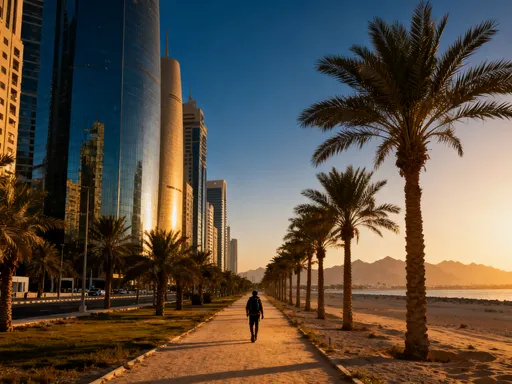
Walking through Manama’s commercial zones is an experience defined by contrast. One moment, you’re surrounded by the hum of traffic and the reflective glare of high-rise facades; the next, you step into a shaded walkway where palm trees sway and the scent of blooming frangipani fills the air. This duality is central to the city’s urban hiking appeal. On a recent morning walk along the Al Fateh Highway promenade, I moved between zones of intensity and calm. Business professionals in crisp attire hurried toward offices, while families strolled leisurely near water features. The rhythm of foot traffic varied block by block, creating a dynamic yet never overwhelming atmosphere.
Sensory details anchor the experience. The aroma of freshly ground Arabic coffee drifts from sidewalk cafes, mingling with the faint saltiness of the nearby Gulf. Sunlight dances across glass towers in the early hours, casting long shadows that provide natural relief from the heat. Street art appears unexpectedly—vibrant murals depicting Bahraini folklore or marine life—adding moments of surprise and delight. Even the soundscapes shift: the clang of construction gives way to the soft trickle of fountains in pocket parks, where benches invite brief pauses. These micro-environments, carefully designed and maintained, transform what could be a sterile commute into a journey worth savoring.
Perhaps the most striking aspect is the sense of discovery. Unlike pre-planned tours or guided visits, urban hiking allows for spontaneity. A side street might lead to a hidden courtyard with mosaic tile work, or a small bookstore tucked between offices might display local literature. These unplanned encounters foster a personal connection to the city. For mothers balancing family responsibilities, such walks offer a rare opportunity for self-care—time to breathe, reflect, and recharge without leaving the city. The urban hike becomes not just physical exercise, but emotional restoration. In a world that often feels rushed and disconnected, Manama’s walkable corridors provide a space to slow down and notice the details that make a place feel alive.
Top Routes: Where to Walk in Manama’s Commercial Heart
For those ready to explore, Manama offers several well-defined routes that combine safety, scenery, and convenience. One of the most accessible is the Al Fateh Highway promenade, a landscaped pathway running parallel to one of the city’s main thoroughfares. Though adjacent to traffic, the walkway is separated by green buffers and features regular seating, drinking fountains, and shade structures. At approximately 3.5 kilometers one way, it’s ideal for a 45-minute loop when combined with a return route through adjacent neighborhoods. Morning walkers are rewarded with cooler temperatures and views of the sunrise over the Gulf, while evening strollers enjoy the soft glow of city lights reflecting off building facades.
Another popular option is the Seef District loop, which circles a cluster of shopping malls, hotels, and office complexes. This 4-kilometer circuit is fully pedestrianized in key sections, with wide sidewalks, decorative lighting, and frequent access to restrooms and refreshments. Highlights include the Seef Mall atrium, where indoor and outdoor spaces blend seamlessly, and a series of public art installations that celebrate Bahraini heritage. The route is especially family-friendly, with smooth surfaces suitable for strollers and shaded areas perfect for short breaks. Because many shops and cafes remain open late, it’s also a safe choice for women walking solo during daylight and early evening hours.
For a more tranquil experience, the Diplomatic Area green paths offer a quieter alternative. Nestled among embassies and residential compounds, this network of tree-lined walkways spans over 5 kilometers and features native plantings, birdwatching spots, and benches positioned for quiet contemplation. The terrain is flat and well-maintained, making it suitable for all fitness levels. Unlike busier commercial zones, this area sees less foot traffic, allowing for a more meditative pace. Walkers often spot hoopoe birds or desert lizards darting between shrubs—a reminder that nature persists even in urban settings. All three routes are accessible by public transit or short taxi rides, and each includes signage in both Arabic and English, enhancing navigation for visitors.
Hiking Meets Culture and Commerce: A Unique Blend
One of the most rewarding aspects of urban hiking in Manama is the way it weaves together daily life, culture, and economic activity. Unlike isolated nature trails, city walks pass through the living fabric of the community. A route from Bab Al Bahrain to Manama Souq, for example, begins at a historic gateway and unfolds into a maze of narrow lanes filled with spice vendors, textile sellers, and gold merchants. Walking this path at a leisurely pace allows time to observe rituals of trade, exchange greetings with shopkeepers, and appreciate architectural details like wind towers and carved wooden doors. These interactions, though brief, create a sense of belonging and mutual respect.
Urban hiking also supports local businesses. When people walk, they are more likely to pause, browse, and make unplanned purchases. A café with outdoor seating becomes an inviting stop; a boutique displaying handmade crafts catches the eye. This foot traffic benefits small entrepreneurs and contributes to the vibrancy of commercial districts. In Manama, where economic diversification is a national priority, pedestrian-friendly design plays a subtle but important role in sustaining local commerce. Planners have recognized that lively streets attract investment, tourism, and talent—making walkability not just a health initiative, but an economic one.
Moreover, the integration of culture and movement fosters intergenerational connection. Mothers walking with teenage daughters can share memories of visiting the same souq years ago, while grandparents point out landmarks that have stood for decades. These shared experiences strengthen family bonds and pass on local knowledge. Public art, historical markers, and restored buildings serve as informal educators, offering insights into Bahrain’s maritime history, pearl diving legacy, and Islamic architecture. In this way, urban hiking becomes a form of cultural stewardship—each walk a quiet act of preservation and appreciation.
Practical Tips for Your Urban Hike
Planning a successful urban hike in Manama begins with preparation. First, check the weather forecast and aim for early morning or late afternoon walks, when temperatures are milder. The Gulf climate can be hot and humid, especially between May and October, so choosing cooler hours is essential for comfort and safety. Wear lightweight, breathable clothing in light colors, and always apply broad-spectrum sunscreen. A wide-brimmed hat and UV-protective sunglasses provide additional defense against strong sunlight.
Footwear matters. While urban trails are paved, distances can add up quickly. Supportive walking shoes with cushioned soles prevent fatigue and reduce the risk of blisters. Avoid sandals or flip-flops, which offer little protection on long walks. Carry a reusable water bottle—many public areas now include hydration stations—and consider packing a small snack like dates or nuts for energy. Some routes pass by convenience stores or cafes, but it’s wise to be self-sufficient.
Navigation is straightforward thanks to clear signage and reliable mobile maps. Download offline versions of maps in case of spotty connectivity. Stick to designated pedestrian pathways and use crosswalks when crossing streets. Many intersections have timed signals, allowing ample time to cross safely. For those concerned about safety, walking in groups or choosing well-populated routes during daylight hours is recommended. Finally, embrace flexibility. Allow time for unplanned stops—a conversation with a local, a photo of a mural, or a coffee break at a sidewalk café. These moments are not distractions; they are the heart of the urban hiking experience.
The Bigger Picture: Why Urban Hiking Matters
Urban hiking in Manama is more than a recreational trend—it’s a reflection of how cities are evolving to meet the needs of their people. As global populations become increasingly urbanized, the demand for accessible, inclusive public spaces grows. Manama’s investment in walkable infrastructure signals a commitment to sustainability, public health, and social connection. By designing streets that prioritize people over cars, the city reduces congestion, lowers emissions, and creates environments where families can thrive.
These changes have ripple effects. When women and older adults feel safe and comfortable walking, they are more likely to engage in physical activity, socialize, and participate in community life. Children who see their parents walking for pleasure learn to value movement as part of daily routine. Local economies benefit from increased foot traffic, and property values often rise in well-maintained, walkable neighborhoods. Over time, these shifts contribute to a culture of wellness and civic pride.
Ultimately, urban hiking invites us to rethink what adventure means. It doesn’t always require climbing mountains or traveling far from home. Sometimes, it’s as simple as stepping outside and choosing to walk with intention. In Manama, where tradition and modernity coexist, the act of walking becomes a bridge—between past and present, between people and place, between routine and discovery. So lace up your shoes, step onto the path, and let the city reveal itself one block at a time. The journey is closer than you think.