This Is What Happens When You Actually Check In to Liverpool’s Culture
You know that feeling when a city surprises you? Liverpool did exactly that. I went in expecting Beatles lore and football vibes, but what I found was deeper — raw, living culture in every corner. From indie galleries to underground gigs, this city breathes creativity. Checking in here isn’t just about staying somewhere; it’s about feeling something. Let me take you through the real cultural heartbeat of Liverpool — the kind you won’t find in guidebooks.
First Impressions: Beyond the Postcard
Stepping off the train at Lime Street Station, there’s an unmistakable energy in the air — not the polished bustle of a tourist hub, but the genuine rhythm of a city that knows who it is. The grand Victorian façade of the station stands as a proud reminder of Liverpool’s industrial past, yet just beyond it, vibrant street art splashes color across brick walls, signaling a present that’s alive and evolving. This is not a city preserved behind glass. Liverpool is dynamic, layered, and unapologetically authentic.
The locals, with their distinctive Scouse lilt, move through the streets with warmth and ease. A simple exchange at a corner café or a shared laugh over a missed bus stop reveals a community that values connection. It’s no accident that Liverpool was named a UNESCO City of Music in 2015 — the title reflects a deep-rooted cultural identity that permeates daily life. But music is only one thread. The city’s creative fabric is woven with art, literature, performance, and a resilient spirit born from its history as a global port.
Walk through the city center, and you’ll notice how heritage and modernity coexist. Georgian buildings house independent bookshops, while converted warehouses in the Baltic Triangle buzz with tech startups and artist collectives. Murals depicting local legends, from football icons to community activists, cover entire sides of buildings, turning the city into an open-air gallery. Culture here isn’t confined to institutions — it spills onto sidewalks, into alleyways, and through the open doors of basement studios. This isn’t a destination for passive observation. To truly experience Liverpool is to step inside its ongoing story.
The Music That Never Stops
It’s impossible to talk about Liverpool without mentioning The Beatles. Their legacy is everywhere — from the bronze statues on Mathew Street to the nightly renditions of “Hey Jude” by street performers. But to reduce Liverpool’s music scene to its most famous sons would be a profound misunderstanding. This city doesn’t live in the past; it uses its past as a springboard for continuous musical innovation.
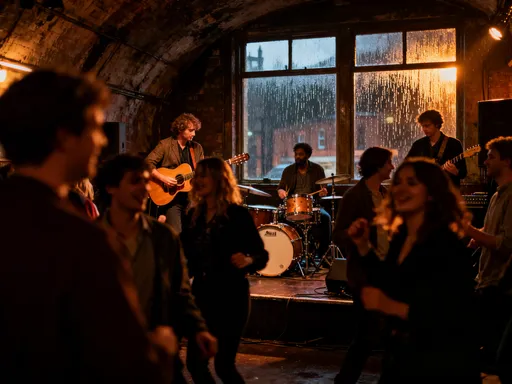
Every night of the week, intimate venues across Liverpool host live performances that pulse with originality and passion. Places like Zanzibar Club, tucked down a narrow lane in the Ropewalks, draw crowds for everything from jazz improvisations to indie rock showcases. There’s no velvet rope, no inflated cover charge — just a stage, a sound system, and a room full of people who’ve come to listen, not to be seen. The atmosphere is democratic, where a 17-year-old with a guitar and a dream stands equal to a seasoned performer.
Jacaranda, the club once managed by Beatles’ manager Brian Epstein, remains a cornerstone of the scene. Today, it continues to support emerging artists, hosting open mic nights and acoustic sessions that feel more like gatherings among friends than formal concerts. Meanwhile, spaces like Static and Camp and Furnace offer sprawling complexes where live music, DJ sets, and art installations blend into immersive experiences. The genres are diverse — post-punk, folk, electronic, soul — but the spirit is consistent: music as expression, as community, as identity.
What makes Liverpool’s music culture so accessible is its deep integration into everyday life. Buskers on Bold Street play original compositions between shifts at their day jobs. Local radio stations spotlight homegrown talent. Even pubs like Philharmonic Dining Rooms, famous for their ornate architecture, regularly feature live acoustic sets. Here, music isn’t a commodity — it’s a shared language. To check in is to become part of that conversation, whether you’re clapping along in the front row or humming a new melody on your walk home.
Art That Speaks Back
In many cities, galleries are serene spaces where visitors whisper and avoid eye contact. Liverpool flips that script. Art here is loud, confrontational, and deeply engaged with the world. At Tate Liverpool, located in the Royal Albert Dock, contemporary installations challenge viewers to think critically about identity, politics, and social change. Exhibitions often spotlight underrepresented voices, from Black British artists to LGBTQ+ creators, ensuring that the conversation is inclusive and urgent.
But the real pulse of the city’s art scene beats strongest outside the major institutions. In neighborhoods like the Baltic Triangle and Edge Hill, grassroots galleries and artist studios thrive in repurposed industrial spaces. 139 Artists’ Studios, for instance, houses over 100 creatives in a former textile warehouse. Visitors can tour the open studios, watch artists at work, and even purchase pieces directly from the makers. This proximity between creator and audience fosters a sense of intimacy and accountability — art isn’t made in isolation, but in response to the community around it.
Street art, too, plays a vital role in Liverpool’s cultural dialogue. Unlike decorative murals meant only for Instagram, many pieces carry messages. A stencil in Toxteth might call for justice after a local incident. A large-scale painting in the Ropewalks could celebrate the legacy of women in the city’s labor movement. These works aren’t commissioned by the city — they emerge organically, often overnight, adding layers of meaning to the urban landscape. In Liverpool, art doesn’t just reflect culture — it shapes it, challenges it, and demands that people pay attention.
Theatre, Spoken Word, and Hidden Stages
The Everyman Theatre, with its striking red façade and reputation for bold productions, is a crown jewel of Liverpool’s performing arts scene. Known for launching the careers of actors like Jonathan Pryce and Claire Sweeney, it continues to produce work that’s both artistically rigorous and socially relevant. But while the Everyman draws audiences from across the country, the city’s true theatrical soul lives in smaller, more unexpected spaces.
Basement cafés in Wavertree host weekly poetry slams where performers deliver raw, personal verses about love, loss, and identity. At FACT (Foundation for Art and Creative Technology), experimental plays blend digital media with live performance, creating immersive experiences that blur the line between audience and actor. Meanwhile, Liverpool Central Library regularly hosts storytelling nights where elders share memories of the city’s past, from wartime evacuations to the rise of the Merseybeat sound.
What unites these diverse performances is a commitment to authenticity and participation. These aren’t passive entertainment experiences — they’re invitations to engage. A monologue about growing up on a Liverpool housing estate might spark a conversation in the lobby afterward. A bilingual performance in English and Arabic could open a dialogue about migration and belonging. The city’s rich linguistic heritage, from Scouse slang to multilingual communities, adds depth to every performance, making language itself a form of cultural expression.
Spoken word, in particular, has flourished in Liverpool. Open mic nights at venues like Jacaranda and The Lantern Theatre give anyone a chance to share their voice. Whether it’s a teenager reading their first poem or a seasoned performer debuting a new piece, the response is consistently supportive. This culture of encouragement reflects a broader value in Liverpool — the belief that everyone has a story worth telling, and that stories have the power to connect, heal, and inspire.
Museums with a Pulse
National Museums Liverpool comprises eight sites, each offering a different lens on the city and the world. But what sets them apart is their commitment to storytelling over spectacle. The Museum of Liverpool, the largest dedicated urban museum in the UK, doesn’t just display artifacts — it weaves together personal narratives, oral histories, and interactive exhibits to tell the city’s complex story. From the impact of the transatlantic slave trade to the rise of the Beatles, the museum doesn’t shy away from difficult topics, presenting them with honesty and care.
At the World Museum, science and imagination collide. Planetarium shows take visitors on interstellar journeys, while natural history exhibits explore biodiversity and climate change. But even here, the human element is central. Exhibits often highlight local scientists, inventors, and environmental activists, grounding global issues in local action. Children press buttons to simulate earthquakes, while elders recall the 1989 Liverpool earthquake — a small tremor, but one that left a lasting impression on the city’s collective memory.
The Merseyside Maritime Museum, located in the historic docklands, connects Liverpool’s past as a global port to contemporary issues of migration, trade, and labor. Rather than glorifying empire, the museum examines the human cost of shipping and industry, featuring stories from dockworkers, seafarers, and displaced families. Temporary exhibitions have explored the experiences of refugees arriving in Liverpool today, drawing powerful parallels between past and present.
What makes these museums so effective is their emphasis on emotional resonance. Visitors don’t just learn facts — they feel them. A child’s suitcase from the evacuation of Liverpool during WWII, displayed at the Museum of Liverpool, carries more weight than any textbook description. A recording of a dockworker’s song, played in a Maritime Museum exhibit, transforms data into lived experience. In Liverpool, museums aren’t repositories of the past — they’re bridges to understanding the present.
Cultural Eats: More Than Fish and Chips
Liverpool’s culinary scene is a direct reflection of its history as a port city. For centuries, ships arrived from the Caribbean, West Africa, Southeast Asia, and beyond, bringing not just goods but people, traditions, and flavors. Today, that legacy lives on in the city’s diverse food culture. While you can still find excellent fish and chips by the waterfront, the real discoveries lie in its multicultural neighborhoods.
In Toxteth, Caribbean restaurants serve rich, aromatic curries made with recipes passed down through generations. The scent of jerk chicken and plantains fills the air, drawing locals and visitors alike. In the Ropewalks, Vietnamese pho shops offer steaming bowls of broth and herbs, a quiet nod to the city’s Southeast Asian community. On Lark Lane, artisan bakeries bake sourdough with locally milled flour, while vegan cafés serve globally inspired dishes — jackfruit tacos, coconut dal, turmeric lattes — that reflect both innovation and inclusivity.
Independent markets are another cornerstone of Liverpool’s food culture. Grand Central Hall Market, housed in a stunning Edwardian building, features over 50 stalls every weekend. Here, you’ll find everything from handmade pasta to Nigerian jollof rice, from small-batch honey to organic vegetables grown in nearby Wirral. Many vendors are immigrants or first-generation entrepreneurs, turning family recipes into sustainable businesses. Shopping here isn’t just about groceries — it’s a way to support the community and learn its stories.
Dining in Liverpool is an act of cultural immersion. A single meal can trace the journey of a dish from Kingston to Liverpool, or from Hanoi to the North West. Conversations at communal tables often begin with “Where’s this recipe from?” and end with laughter and shared bites. In a city shaped by movement and exchange, food becomes a language of welcome. To eat here is to participate in a centuries-old tradition of connection.
How to Truly Check In — Not Just Visit
To experience Liverpool’s culture, you must shift from tourist to participant. This doesn’t require grand gestures — small choices make the biggest difference. Stay in a locally-run guesthouse or boutique B&B instead of a chain hotel. Book a room above a café in the Baltic Triangle, where the owner might recommend a hidden jazz night or lend you a bike to explore the docks.
Engage with the people around you. Order a coffee at a neighborhood café and ask the barista about their favorite gallery. Chat with a bookseller at News From Nowhere, a radical feminist bookshop in the Georgian Quarter. Attend a free event — many galleries offer “First Thursday” nights with live music and artist talks. Use the Loop bus, which circles the city’s cultural hotspots, from the Philharmonic Hall to the Liverpool Cathedral. It’s affordable, reliable, and used by locals, giving you a genuine sense of daily life.
Timing your visit can deepen the experience. Plan your trip around Liverpool International Music Festival, when the city erupts in sound — from orchestral performances in St. George’s Hall to pop-up concerts in public squares. Or attend LightNight, an annual all-night arts festival where museums, churches, and warehouses open their doors for performances, workshops, and installations. These events transform the city into a living stage, where everyone is both audience and performer.
The key is to slow down. Resist the urge to check off landmarks. Sit in Sefton Park and watch families picnic by the Palm House. Walk along the Liverpool47 trail, a self-guided route through street art and cultural sites. Let the city reveal itself in moments — a snippet of conversation, a mural you hadn’t noticed before, a song drifting from an open window. Liverpool doesn’t offer a curated experience — it offers a real one. And once you check in, you’re not just visiting. You’re part of the story.
Liverpool doesn’t perform culture — it is culture. From music to murals, food to spoken word, every element pulses with authenticity. To check in here is to engage, not observe. It’s about presence, curiosity, and connection. So next time you travel, ask: Are you just passing through — or are you truly checking in?