I kept saying ‘He’s fine outside’—until summer hit: How pet monitoring gave me real peace of mind
Remember that voice in your head saying, “They’re just in the backyard—they’re fine”? I believed it—until one sweltering afternoon when my dog panted nonstop, hidden under the porch. That’s when I realized: seasonal changes quietly reshape our pets’ safety. What felt harmless in spring became risky in summer heat. Today, smart pet monitoring doesn’t just track movement—it translates subtle signs into clear alerts, helping me truly protect my pet, season by season.
The Seasonal Shift No One Talks About
It’s so easy to fall into the rhythm of letting our pets enjoy the outdoors. When spring rolls around, we open the gate a little more often. The grass is green, the air is soft, and our dogs wag their tails like they’ve been given a gift. I used to think, He’s happy. He’s safe. He’s just outside. But I’ve learned that the seasons don’t just change the weather—they change the rules of safety, often without warning.
My wake-up call came during an unseasonably hot May weekend. I was inside, cleaning up after lunch, when I remembered I hadn’t seen my dog, Max, in over an hour. I stepped onto the back porch and called his name. Nothing. Then, I heard it—labored breathing. I found him curled under the deck, panting heavily, his eyes half-closed. The temperature was already in the mid-80s, and the wood deck was radiating heat like a griddle. He wasn’t just warm—he was overheating.
That moment changed everything. I’d assumed he’d find shade. I’d assumed he’d drink water. I’d assumed he’d come to me if something was wrong. But pets don’t communicate distress the way we do. They don’t knock on doors or call for help. They endure. And sometimes, what looks like relaxation is actually discomfort in silence.
Seasonal shifts affect more than just temperature. Longer daylight hours mean more outdoor time, which sounds lovely—until you realize your dog might be stuck in a fenced yard during a sudden thunderstorm. Or your cat might wander into a neighbor’s garage and get locked in when the door lowers automatically. These aren’t rare events. They happen every year, often without anyone noticing until it’s too late.
What I’ve come to understand is that love and instinct aren’t always enough. We need tools that help us see beyond our assumptions. We need a way to know, not guess. That’s where pet monitoring came in—not to replace my attention, but to extend it.
From Guesswork to Clear Insights
Before I had any kind of monitoring system, my pet care routine was built on habits and hope. I’d fill his water bowl in the morning and assume it lasted all day. I’d check the yard every few hours and believe he was fine because I didn’t see anything wrong. But that kind of care leaves too much to chance.
One night, I woke up around 2 a.m. and had that nagging feeling—something wasn’t right. Max usually slept in his bed by the kitchen, but he wasn’t there. I grabbed my phone, opened the pet camera app I’d recently installed, and saw him in the backyard, pacing in circles near the fence. His body language was tense. He wasn’t barking, but he wasn’t settling either. I went outside and found a raccoon digging near the compost bin. Max had been on alert for over an hour, and I hadn’t known a thing.
That was the first time I realized: I wasn’t just missing moments—I was missing signals. Pets don’t speak in words, but they speak in behavior. A change in routine, a shift in posture, a refusal to eat—these are their ways of telling us something’s off. And when we’re not there to see it, we miss the chance to act early.
Modern pet monitoring systems do more than show live video. They track movement patterns, detect unusual stillness, monitor room temperature, and even pick up sounds like whining or barking. Some apps send alerts when activity drops below a certain level—something I now know can indicate pain, anxiety, or illness. Last winter, an alert about low movement led me to notice Max was favoring one leg. A vet visit confirmed a minor sprain, easily treated because we caught it early.
Before, I would’ve waited until he stopped walking altogether. That’s the power of these tools—not surveillance, but insight. They turn invisible concerns into visible information. And that changes everything. Instead of wondering, Is he okay?, I can check. Instead of reacting to a crisis, I can prevent one.
How Summer Changes the Game
Summer feels like freedom for pets. Longer days, open windows, backyard play—it’s all part of the joy of the season. But that same freedom comes with hidden dangers. Hot pavement can burn paws in minutes. Humidity makes it harder for dogs to cool down. And sudden storms can trap pets outside before you even notice the sky has darkened.
I used to let Max stay in the yard from morning until dusk. He loved it. I loved that he was happy. But last summer, a heatwave hit, and I started getting alerts from my outdoor camera system. The temperature sensor showed the backyard hit 92 degrees by noon. The shaded area under the deck was only a few degrees cooler. Then, the motion tracker showed he hadn’t moved in over 90 minutes.
I rushed outside. He was lying flat, tongue out, breathing fast. Not sleeping—overheating. I brought him inside, gave him water, and cooled his paws with damp towels. He recovered, but it was a close call. That moment taught me that shade isn’t always enough. Dogs don’t sweat like we do. They cool down by panting and through their paws. On hot days, even a few hours outside can be dangerous.
Now, my system sends me an alert when the temperature rises above 85 degrees. I also set up motion zones—if Max stays in one spot for more than an hour, I get a notification. It’s not about restricting his freedom. It’s about knowing when to step in. I still let him enjoy the outdoors, but now I rotate his time—30 minutes outside, then a break indoors with cool water and airflow.
And it’s not just about heat. Summer brings bugs, too. Ticks, fleas, mosquitoes—all of which can carry diseases. Some cameras have night vision and zoom features that let me check his coat for pests before he comes inside. I’ve caught ticks early just by reviewing footage. Again, it’s not about paranoia. It’s about prevention.
The real shift for me was realizing that summer doesn’t just mean more outdoor time—it means more responsibility. And with the right tools, I can meet that responsibility without stress.
Winter’s Hidden Dangers, Revealed
If summer brings heat, winter brings silence. The days are shorter. The air is still. Pets move slower. And sometimes, that stillness masks danger. I used to think winter was safer—less sun, fewer bugs, no heatstroke. But I was wrong.
A few years ago, my neighbor’s cat, Luna, went missing on a snowy night. They searched the neighborhood, put up flyers, knocked on doors. After three hours, they found her trapped in a heated storage shed behind their garage. The door had closed behind her, and no one heard her meowing. She was cold but alive, curled up near a water heater. It could’ve ended so differently.
That story stayed with me. Now, I use an outdoor pet camera with night vision and two-way audio. It’s mounted near the side gate, where Max sometimes noses open loose panels. One icy morning, I got an alert about movement in the alley. I pulled up the app and saw Max sniffing around the shed. The door was slightly ajar. I used the speaker to call him back. Seconds later, the wind slammed the door shut. If he’d gone inside, he might’ve been trapped for hours.
Winter also affects older pets. Max is seven now, and I’ve noticed he moves more stiffly in the cold. His usual morning zoomies are slower, his steps more careful. My indoor camera tracks his activity levels, and I’ve set up alerts for unusual inactivity. One morning, he didn’t get up when I turned on the kitchen light. The camera showed him lying still, shivering slightly. I checked his bed—it was damp from condensation. I moved him to a warmer spot, added a heated pad, and monitored him closely. By afternoon, he was back to normal.
These systems don’t just track location. They help us understand how our pets are really doing. Cold floors, drafty rooms, icy paws—these small things add up. And when your pet can’t tell you they’re uncomfortable, the camera becomes their voice.
Communication Beyond Words
We talk to our pets all the time. Who’s a good boy? Want a treat? Time for bed? But they can’t answer back—not in words, anyway. And that’s where technology steps in, not to replace our bond, but to deepen it.
One of the most powerful features of modern pet monitors is sound detection. It doesn’t just record noise—it analyzes it. Whining, whimpering, repetitive barking—these are often signs of stress, pain, or fear. The system learns your pet’s normal sounds and flags anything unusual.
At 3 a.m. one night, I got an alert: Unusual barking detected. I opened the app and saw Max standing by the back door, barking at the fence. Not playfully—urgently. I watched for a moment and noticed the gate was swinging open. A neighborhood dog had pushed it open and was wandering into our yard. Max was sounding the alarm. He wasn’t being noisy—he was protecting our space.
Another time, the audio picked up a faint meow from the garage. I didn’t even know the neighbor’s cat had gotten inside. I opened the door, and she darted out. Without the monitor, she might’ve stayed trapped for days.
These moments taught me that pets are always communicating. They’re just not using our language. Monitoring tools help translate their signals—body language, sounds, routines—into something we can understand. It’s like learning a new dialect of love.
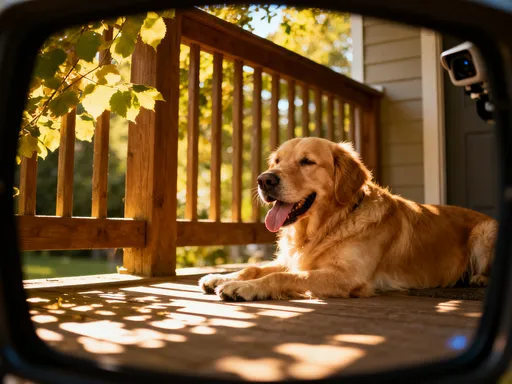
And it’s not just about emergencies. Sometimes, the camera shows Max lying in a sunbeam, tail thumping softly. Or napping with a toy in his mouth. These aren’t alerts. They’re gifts. They remind me why I do this—not because I’m afraid, but because I care.
Making It Work in Real Life
I’ll be honest—I didn’t start with a full system. I was overwhelmed by options, worried about cost, and unsure if I could figure it out. I’m not a tech expert. I just wanted peace of mind.
So I started small. I bought one indoor camera that connected to my Wi-Fi and synced with my phone. It had night vision, two-way audio, and motion alerts. I placed it in the living room where Max hangs out during the day. Within a week, I was checking in during work breaks, saying hi through the speaker, watching him nap. It felt like staying connected, even when I was away.
Then, I added an outdoor camera with weatherproof housing and a wider field of view. I mounted it under the eaves, pointing at the yard and side gate. It had temperature and humidity sensors, which I found especially helpful in summer and winter. I set up custom alerts—like Temperature above 85°F or No movement for 2 hours. I didn’t need to watch constantly. The system did the watching for me.
Integration was easier than I expected. Most apps work with voice assistants, so I can ask my smart speaker, “Show me the backyard camera,” and it appears on my TV. I also linked alerts to my smartwatch, so I feel a tap if something urgent happens—no need to pull out my phone.
The key was starting simple and building gradually. I learned Max’s patterns—when he drinks, when he naps, when he patrols the fence. The system adapted to us, not the other way around. And because I wasn’t trying to manage ten devices at once, it felt manageable, not stressful.
If you’re thinking about trying pet monitoring, my advice is: begin with one camera in a space your pet uses most. See how it feels. Learn what alerts matter to you. Then expand, if you want to. You don’t need every feature. You just need the ones that bring you peace.
Peace That Grows with Every Season
It’s been over a year since I started using pet monitoring, and the change in my mindset has been profound. I don’t lie awake wondering if Max is okay. I don’t second-guess whether I closed the gate or filled the water bowl. I can check—quickly, quietly, clearly.
That shift from doubt to confidence has deepened our bond. I’m more present when we’re together because I’m not carrying the weight of worry when we’re apart. And when I see him on camera, stretching in the sun or chasing a leaf, I don’t just smile—I feel grateful. Grateful that I can protect him, not just with love, but with awareness.
Technology hasn’t replaced my role as his caregiver. It hasn’t made me lazy or distant. If anything, it’s made me more attentive. I notice small changes. I respond sooner. I understand him better.
And as the seasons turn, I’m no longer guessing. I’m prepared. I know when it’s too hot, too cold, too quiet. I know when he’s happy, when he’s alert, when he needs me. That’s not surveillance. That’s care, amplified.
So if you’re still saying, “He’s fine outside,” I get it. I used to say it too. But now, I say something different: I know he’s fine—because I can see him. And that makes all the difference.