Cut my family’s bedtime chaos from 60 minutes to 15: The sleep app that finally got us all resting
Remember those endless nights—kids stalling, partners scrolling, no one truly winding down? I was drowning in bedtime chaos until we tried a simple sleep app designed for families. It didn’t just silence screens; it reshaped our routines, eased tensions, and brought us closer. What started as a fix for poor sleep became a tool for connection. This is how one small tech shift gave us calmer nights, better mornings, and more presence as a family.
The Bedtime Battle No One Wins
It was 9:45 PM, and my youngest was still in pajamas—on the living room floor, begging for just five more minutes of tablet time. My oldest was halfway through a heated argument about brushing her teeth—again. My partner sat on the couch, eyes glazed over a work email, saying, 'I’ll go in ten minutes,' a phrase we all knew meant another half hour. I stood in the kitchen, sipping cold tea, wondering when I’d last spoken to my husband without yelling over toothpaste caps or lost socks.
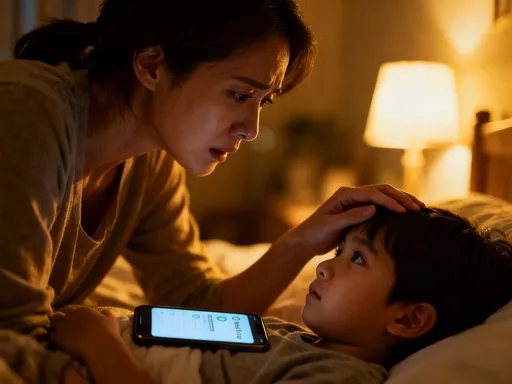
Sound familiar? For years, bedtime in our house felt like a battlefield. No one won. The kids were overtired, we were exhausted, and every night ended with someone crying—sometimes it was the kids, sometimes it was me. We weren’t just fighting about sleep; we were fighting about control, attention, and the quiet erosion of our family’s peace. And the worst part? It wasn’t just one night. It was Monday through Sunday, with only slight variations.
I started noticing how it spilled into everything. Mornings were rushed and tense. My daughter snapped at her little brother over spilled cereal. My husband forgot important meetings. I felt foggy, impatient, and disconnected. We were all physically present, but emotionally, we were miles apart. I’d lie awake thinking, 'Is this just how family life is now?' But deep down, I knew it didn’t have to be. We weren’t broken—we were just stuck in a rhythm that wasn’t working. And then, one rainy Tuesday, a friend mentioned a sleep app she’d started using with her kids. 'It’s not magic,' she said. 'But it helps us remember we’re a team.'
Why Family Sleep Is More Than Just Kid Stuff
At first, I thought sleep tools were just for kids—the ones who needed bedtime stories and lullabies. But the truth is, adults are often the biggest sleep offenders in the house. We tell the kids to power down while we stay up late doomscrolling, answering work messages, or catching up on shows we missed during the day. We expect them to fall asleep quickly while we’ve spent the last hour flooding our brains with blue light and stress.
I realized our problem wasn’t just that the kids resisted bedtime—it was that we didn’t have a real family rhythm. We weren’t modeling the behavior we wanted to see. My daughter wasn’t being defiant when she asked for more screen time; she was mirroring what she saw us doing. And my husband wasn’t being lazy when he said he’d go to bed 'in ten minutes'—he was mentally overloaded, trying to squeeze in one last moment of control in a day that felt completely out of his hands.
Sleep isn’t just a personal habit. It’s a household system. When one person is wired, it affects everyone. A child who stays up too late becomes a child who wakes up cranky. A parent who doesn’t rest becomes less patient, less present, less able to handle the small crises of daily life. I started to see our bedtime chaos not as a discipline issue, but as a design flaw. We needed a system—not more rules, not more yelling, but a shared way to transition from the noise of the day to the quiet of the night.
That’s when I understood: we didn’t need another parenting book or a stricter schedule. We needed something that could help us all—kids and adults—wind down together. Something that didn’t feel like another chore, but like a gentle invitation to slow down. And that’s exactly what the right technology could offer.
Finding the Right Tool: Not Just Another App
Of course, I’d tried sleep apps before. Who hasn’t downloaded something promising on a Sunday night, full of hope? I’d used meditation apps with soothing voices that put *me* to sleep but did nothing for my kids. I’d tried screen-time limit tools that only led to meltdowns and workarounds. One app promised 'scientifically proven sleep cycles' but required me to track every minute of sleep like a lab experiment. After a week, I gave up, feeling like a failure.
What I learned the hard way is that not all sleep tools are created for families. Many are designed for individuals—single professionals, maybe, or college students trying to optimize their rest. But families are messy, unpredictable, and full of different needs. What works for a 40-year-old might not work for a 7-year-old. What calms one child might overstimulate another. And if the tool feels like another demand, another thing to manage, no one will stick with it.
The app that finally worked wasn’t flashy. It didn’t promise miracles or require complex setup. Instead, it focused on one simple idea: helping the whole family transition into sleep mode together. It wasn’t about tracking or judging—it was about guiding. The first thing I noticed was how it treated sleep as a shared experience. Instead of setting individual alarms, it allowed us to create a family wind-down sequence. At 8:00 PM, a soft chime would go off on everyone’s phone. Not a command—just a signal. A reminder that it was time to start slowing down.
And here’s the genius part: it didn’t just alert us—it guided us. For the kids, it showed a colorful checklist: 'Brush teeth,' 'Pick pajamas,' 'Read one story.' For my husband, it suggested a five-minute breathing exercise. For me, it offered a journal prompt: 'What made you smile today?' It wasn’t Mom nagging or Dad enforcing rules. It was the app—neutral, consistent, and kind—inviting us into a routine we’d all agreed on.
How We Built a Shared Wind-Down Routine
The real change didn’t happen overnight. But within a week, we started to notice small shifts. The 8:00 PM chime became something we looked forward to, not dreaded. My daughter started saying, 'The app’s singing!' as if it were a friendly character in our home. My son stopped arguing about pajamas because he knew what came next—the story, the cuddle, the lights-out routine he could count on.
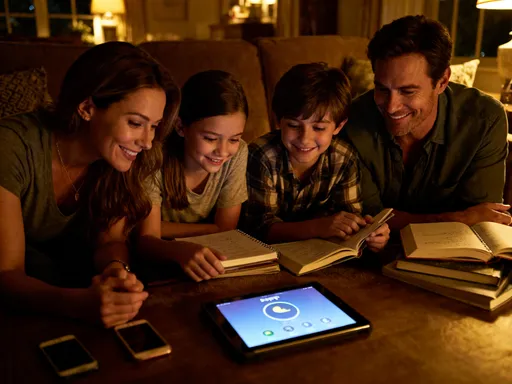
We customized the wind-down sequence to fit our family. For the first 15 minutes, everyone does their personal prep: brushing teeth, changing clothes, washing faces. Then, from 8:15 to 8:30, we move into shared quiet time. The app dims the lights in the kids’ rooms automatically—something we set up with a smart bulb—and plays a soft playlist we all helped choose. One night it’s gentle piano music; another, it’s a nature soundscape with rain and crickets. My husband and I sit in the living room with tea, sometimes reading, sometimes just talking in low voices.
The app also introduced little rituals that became meaningful. On Wednesdays, it prompts us to share one thing we’re grateful for from the day. One night, my 10-year-old said, 'I’m grateful that Dad didn’t get mad when I spilled my juice.' It wasn’t a big moment, but it made my husband’s eyes water. Another night, the app suggested a 'memory swap' journal—where we write a short note to each other about a happy moment. My daughter wrote: 'I like when we watch movies together and laugh.' I kept that note on my nightstand for weeks.
What made this work wasn’t the technology itself—it was how it created space for us to be present. The app didn’t replace parenting. It didn’t replace love or connection. But it gave us a structure that made those things easier to find. It turned bedtime from a battle into a bridge.
From Screen Time to Story Time: Reclaiming Connection
One of the most surprising changes was how much more we talked. Before, the last hour of the day was silent—everyone on their own device, physically in the same room but mentally miles apart. Now, the wind-down time has become our family’s quiet conversation window. My teenage niece, who used to disappear into her phone the second she walked in, now joins us for the last 20 minutes. 'It’s kind of nice,' she said one night. 'No pressure to talk, but if I want to, it’s okay.'
We started using the app’s audio feature to play short family stories—recordings we made together. One weekend, we recorded ourselves reading a favorite book, each of us doing a different character. Now, it plays on rotation during wind-down time. Hearing my son do a silly pirate voice or my husband’s deep 'monster' voice makes us all laugh, even when we’re tired.
But it’s not just the fun moments. The quiet space also opened up room for harder conversations. One night, my daughter asked, 'Why do you and Dad whisper when you think I’m asleep?' It turned into a real talk about how we worry about her, how we want her to feel safe. Another time, my husband admitted he’d been stressed about work—not because he had to, but because the calm atmosphere made it feel safe to share.
I realized we’d been so busy managing the logistics of family life—schedules, meals, chores—that we’d forgotten how to just *be* together. The app didn’t force us to connect. But by removing the noise—the screens, the rushing, the tension—it made connection possible again. And that’s the real gift: not just better sleep, but better presence.
The Ripple Effect: Mornings, Moods, and Family Flow
The changes didn’t stop at bedtime. Mornings transformed too. Instead of frantic shouts of 'Where’s your homework?' or 'We’re late again!', we started waking up with time to breathe. The kids got dressed without being reminded three times. Breakfast felt calmer. We even started eating together more often.
And the mood shifts were undeniable. My daughter’s teacher commented that she seemed 'more settled' in class. My husband said he felt 'clearer' at work, able to focus without that mid-morning fog. I noticed I had more patience—for traffic, for spilled coffee, for the million little things that used to set me off.
What surprised me most was how this one change improved our decision-making. With less mental clutter, we made better choices. We planned meals ahead. We remembered birthdays. We even started scheduling real date nights—not just Netflix on the couch, but actual dinners out.
The app’s insights feature helped us see patterns we’d missed. For example, it showed that on nights when we skipped wind-down time, everyone slept 45 minutes less on average. Or that when my son listened to calming music, he fell asleep 20 minutes faster. These weren’t judgments—just data that helped us make kinder choices for ourselves.
But beyond the numbers, the real shift was emotional. We felt like a team again. Not perfect, not always in sync, but moving in the same direction. And that made all the difference.
Making It Last: Simple Tweaks That Keep It Working
Of course, it hasn’t always been smooth. There are nights when someone forgets to charge their phone, or a last-minute homework crisis throws off the schedule. And that’s okay. The key, I’ve learned, is flexibility. This isn’t about perfection—it’s about progress.
We’ve made small adjustments to keep it working. For example, we rotate who chooses the evening soundscape. One night it’s my daughter’s calming lullabies, the next it’s my husband’s jazz playlist. On busy nights, we shorten the wind-down to 15 minutes instead of 30—just enough to reset without feeling rushed.
We also use the app’s 'family check-in' feature once a week. Every Sunday evening, it asks: 'What worked this week? What could be better?' We answer together, sometimes laughing, sometimes making real adjustments. One week, the kids asked for more time to journal. Another, my husband requested no music on Thursdays because he needed silence after long meetings.
The most important thing we’ve learned is to keep it light. If someone forgets to follow the routine, we don’t scold. We just say, 'We’ll try again tomorrow.' The app supports us, but it doesn’t control us. And that balance—structure with kindness—is what makes it sustainable.
For anyone thinking about trying something like this, my advice is simple: start small. Pick one night a week. Try the wind-down for just 10 minutes. See how it feels. You don’t need to overhaul your life. You just need one moment of calm to begin rebuilding connection.
Technology often gets a bad rap for pulling families apart. But when used with intention, it can do the opposite. It can create space for what matters—presence, peace, and each other. Our bedtime isn’t perfect. But it’s ours. And that’s enough.